One of the things we enjoy most about traveling is finding places that teach us something we did not know before we arrived.
Casa Grande Ruins National Monument in Arizona was one of those places.
We had seen pictures of the ruins before our visit, but standing there and seeing the Great House rising out of the desert was something completely different.
The Great House
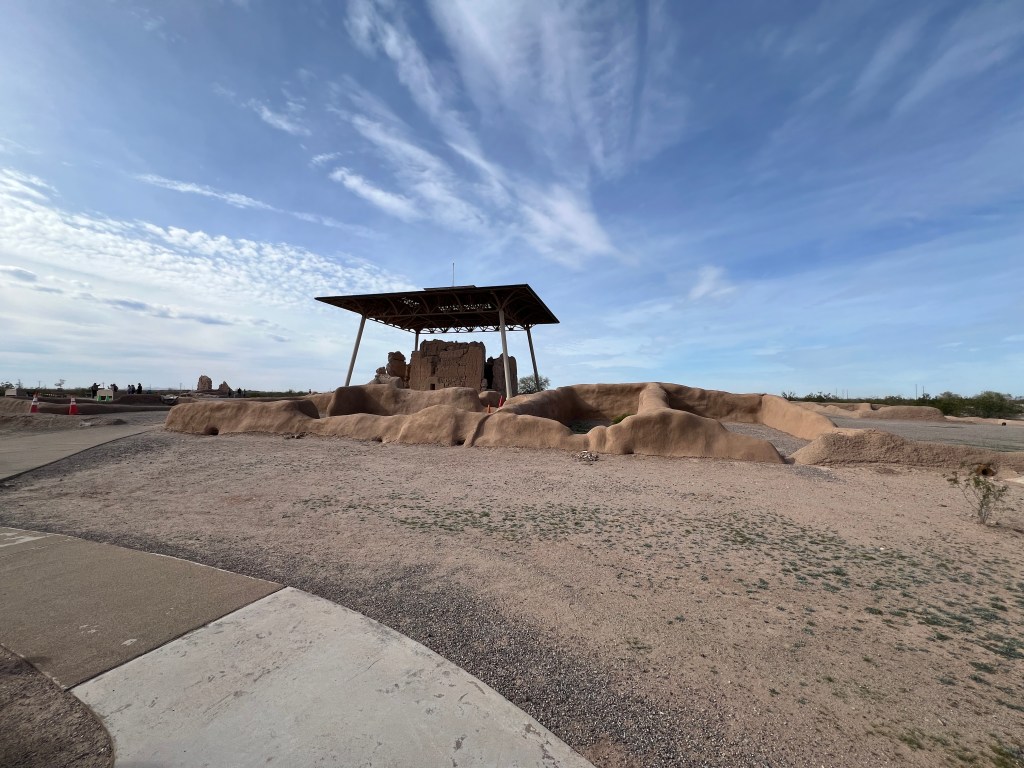
The centerpiece of the monument is the structure known as Casa Grande, or the “Great House.”
It was built by the Ancestral Sonoran Desert people during the 1300s and is one of the largest prehistoric structures ever built in North America. Its exact purpose is still unknown, which somehow makes standing in front of it even more interesting.
The massive protective roof over the ruins immediately catches your eye, but once you get closer, your attention shifts to the structure underneath.
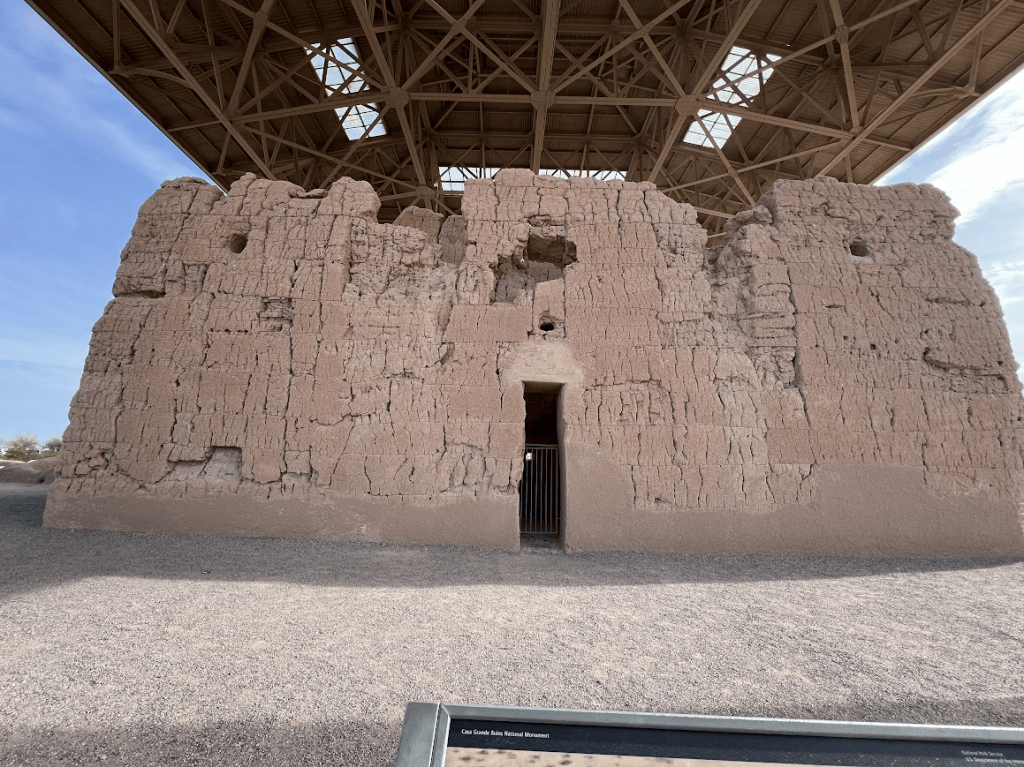
The Great House was made from caliche, a hard desert material made from sand, clay, and calcium carbonate. Creating something of this size with the tools and materials available at the time required an enormous amount of planning and cooperation.
Looking at the remaining walls, openings, and multiple levels, it is hard not to wonder what the building looked like when it was being used.
And, of course, what exactly happened there.
A Civilization Built for the Desert
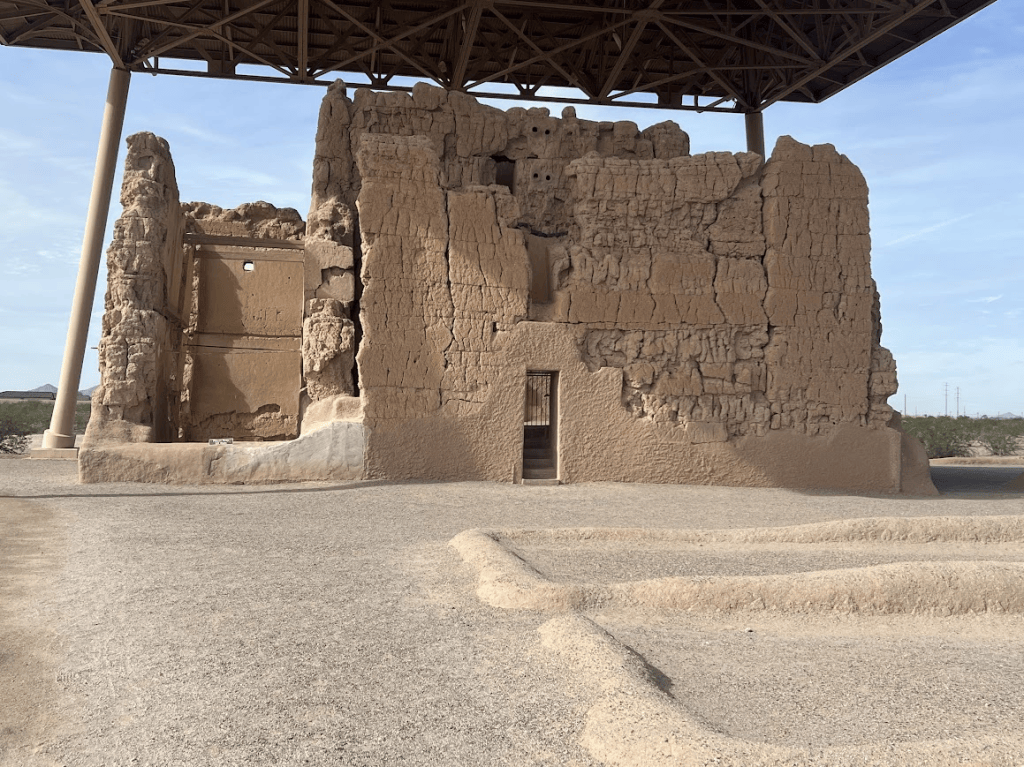
What impressed us just as much as the Great House itself was learning about the people who lived in this part of Arizona.
They weren’t simply surviving in the Sonoran Desert.
They had developed large communities, trade networks, pottery traditions, and an extensive system of irrigation canals that carried water to agricultural fields. Those canal systems allowed farming communities to thrive in an environment where water was always precious.
That added an entirely different perspective to what we were seeing.
The ruins were not an isolated building in the middle of nowhere.
They were part of a much larger community and way of life.
The Smaller Details
Inside the visitor center, the displays helped fill in some of the pieces that the ruins alone cannot show.
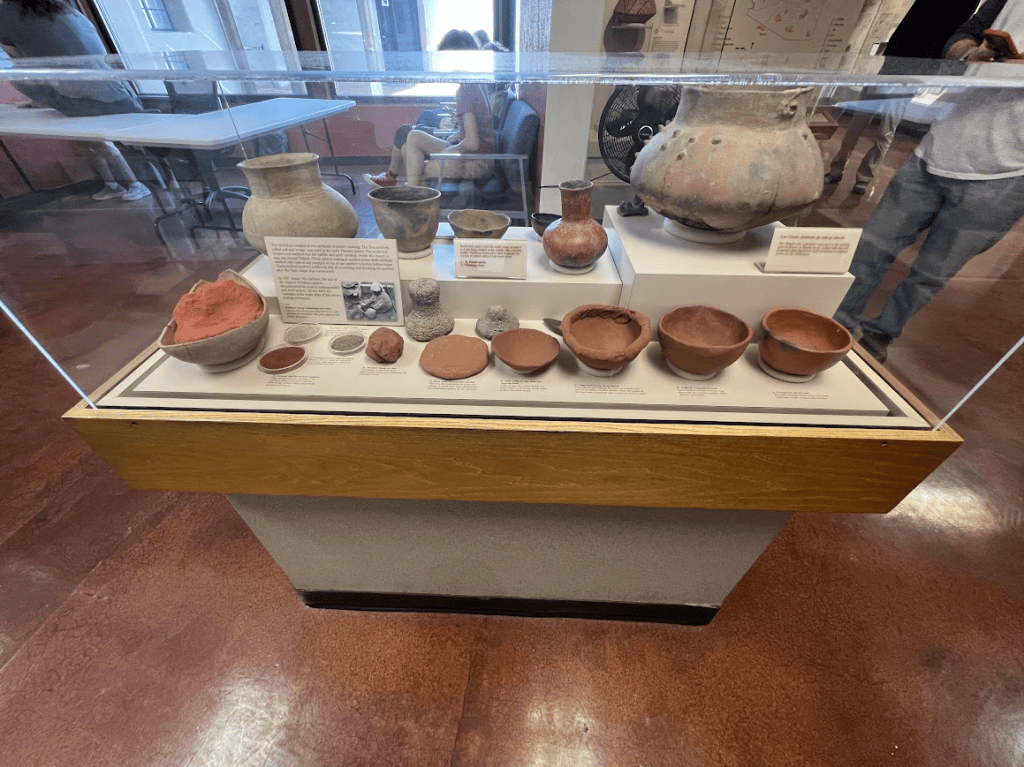
Seeing pottery, tools, and other objects made the history feel more personal.
It is one thing to look at the remains of a centuries-old building.
It is another to see the kinds of things people may have used in their everyday lives.
Imagining Daily Life
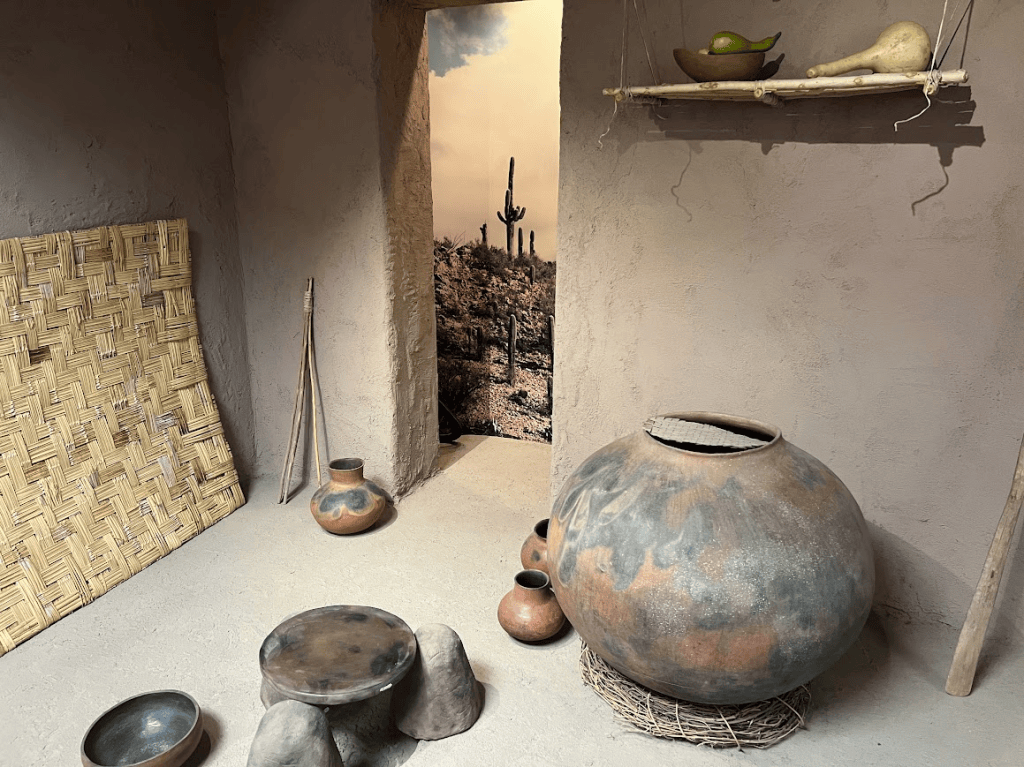
We especially enjoyed the displays that helped show how daily life may have looked.
Those are often the parts of historic sites that stick with us.
Big structures get your attention, but the smaller things help you imagine the people who actually lived there — preparing food, making pottery, raising families, and going through ordinary days in a place that now feels extraordinary to us.
Preserving Something Remarkable
Casa Grande also has an interesting place in the history of preservation in the United States.
Concern over vandalism and souvenir collecting eventually led to efforts to protect the site, and Casa Grande became the nation’s first federal archeological preserve in 1892. It was later designated a national monument in 1918.
That history of preservation is a big reason visitors can still stand there today and see the Great House.
Another Stop Worth Making
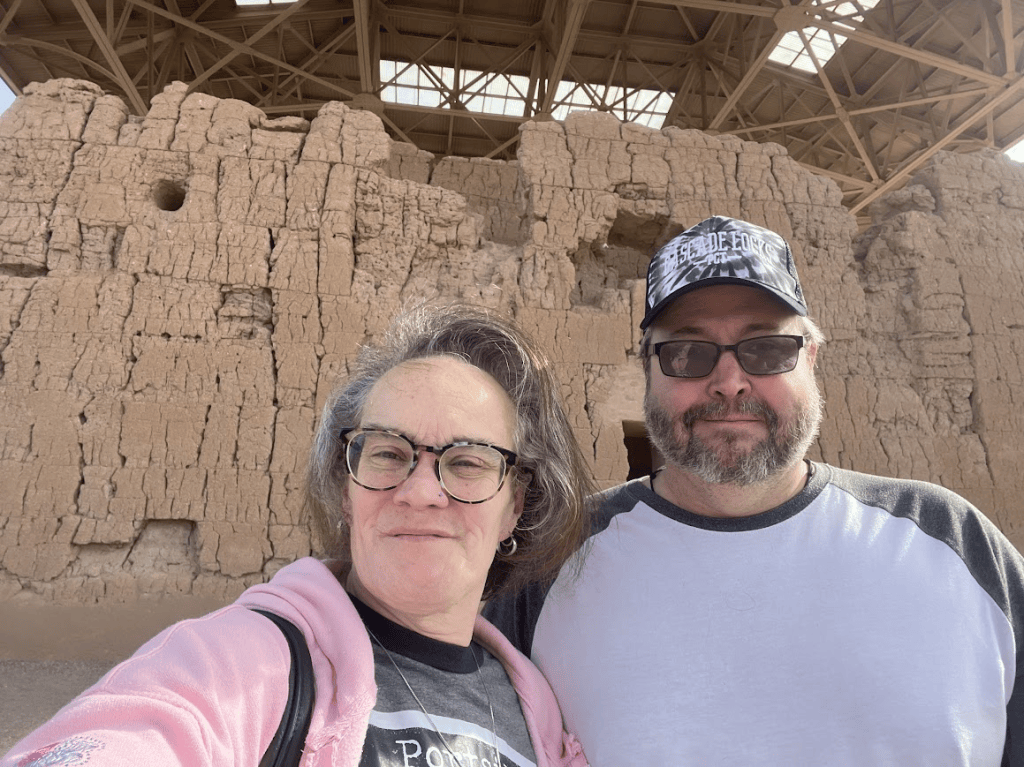
Casa Grande Ruins turned out to be exactly the kind of stop we enjoy finding during our travels.
It wasn’t just something interesting to photograph.
It gave us a chance to learn a little more about the people who lived in the Southwest long before modern Arizona existed, and to appreciate just how much ingenuity went into building a community in such a demanding environment.
We left with more questions than we arrived with — especially about the mysterious Great House and what it may have been used for.
But sometimes that is part of what makes a historic place memorable.
You don’t have to know every answer to appreciate what is still standing in front of you.
And Casa Grande definitely gave us plenty to think about long after we left.

